

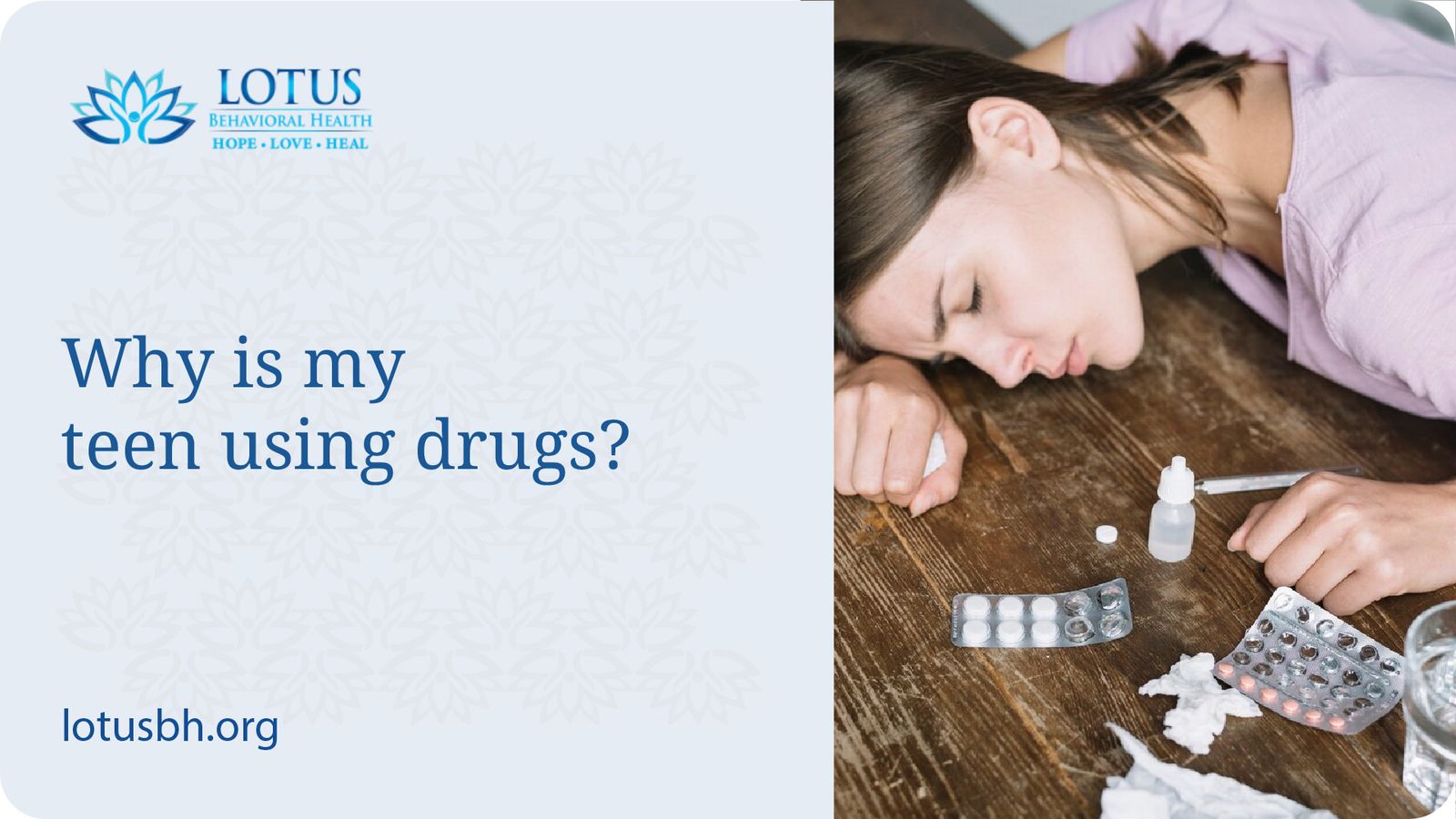
Finding out your teen is using drugs often brings one question first: why? There is rarely a single answer. The National Institute on Drug Abuse notes that people use drugs to feel good, to feel better, to do better, and, especially for young people, out of curiosity and social pressure [1]. Understanding which of these is driving your teen helps you respond to the real problem, not just the behavior. Adolescents experiment with drugs or continue taking them for several reasons, including:
To fit in
Many teens use drugs “because others are doing it”—or they think others are doing it—and they fear not being accepted in a social circle that includes drug-using peers.
To feel good
Abused drugs interact with the neurochemistry of the brain to produce feelings of pleasure. The intensity of this euphoria differs by the type of drug and how it is used.
To feel better
Some adolescents suffer from depression, social anxiety, stress-related disorders, and physical pain. Using drugs may be an attempt to lessen these feelings of distress. Stress especially plays a significant role in starting and continuing drug use as well as returning to drug use (relapsing) for those recovering from an addiction.
To do better
Ours is a very competitive society, in which the pressure to perform athletically and academically can be intense. Some adolescents may turn to certain drugs like illegal or prescription stimulants because they think those substances will enhance or improve their performance.
To experiment
Adolescents are often motivated to seek new experiences, particularly those they perceive as thrilling or daring. The parts of the brain that control judgment and self-control are still developing in the teen years, which makes risky choices, including trying drugs, more likely [2].
To Cope With Trauma or Hard Experiences
Abuse, neglect, bullying, a divorce or the death of someone close can leave a teen with feelings they don't know how to handle. Drugs can seem to quiet painful memories or help them sleep. NIDA lists trauma and abuse among the environmental factors that raise the risk of addiction [2]. If you suspect trauma is part of the picture, trauma-informed treatment matters as much as addressing the substance use.
Because Drugs Are Easy to Get
Access plays a big role. Teens find pills in family medicine cabinets, buy vapes and cannabis through friends, and are offered pills over social media. Counterfeit pills are especially dangerous because many contain fentanyl; our guide on fake oxy pills and fentanyl explains what to watch for.
What Parents Can Do
- Ask before you assume. A calm question like "What does it do for you?" often reveals the reason faster than a lecture.
- Look at what's underneath. Sadness, anxiety, sleep problems or a hidden struggle at school can be the real driver. Our article on signs of high-functioning depression in teens covers depression that's easy to miss.
- Lock up medications and alcohol and keep track of what's in the house.
- Stay connected. Healthy family relationships are one of the strongest protective factors against substance use [1].
- Get help early. The earlier drug use begins, the more likely it is to progress to addiction [2].
If your teen is using to cope with depression, anxiety or trauma, treating only the drug use rarely works. A program that treats co-occurring disorders addresses both, and our team is glad to talk through what level of care fits your family.
Sources
[1] National Institute on Drug Abuse. Prevention.
[2] National Institute on Drug Abuse. Understanding Drug Use and Addiction DrugFacts.

Gary Hazy · Executive Director
Gary leads Lotus Behavioral Health's mission: helping kids and families find hope and heal from substance use. He guides the vision, partnerships and the nonprofit's commitment to access to care.
Read more