
Teen Kratom and 7-OH Use: Signs of Dependence and Withdrawal
Kratom and 7-OH act like opioids and can hook teens fast. Learn the signs of dependence, what withdrawal looks like, and when to get clinical help.
.webp)
If you have found kratom products in your teenager's room, or if you have noticed behavioral changes you cannot explain, and kratom use has come up as a possibility, you are not alone and you are not overreacting.
Kratom and its concentrated derivative 7-hydroxymitragynine, commonly called 7-OH, have become increasingly available to teenagers through gas stations, smoke shops, and online retailers, often marketed in ways that make them seem safe or natural. They are neither.
This article is for parents who need honest, clinical information about what kratom and 7-OH do, what dependence looks like in teenagers, and what to do if you think your teen is using them.
What Is Kratom, and What Is 7-OH?
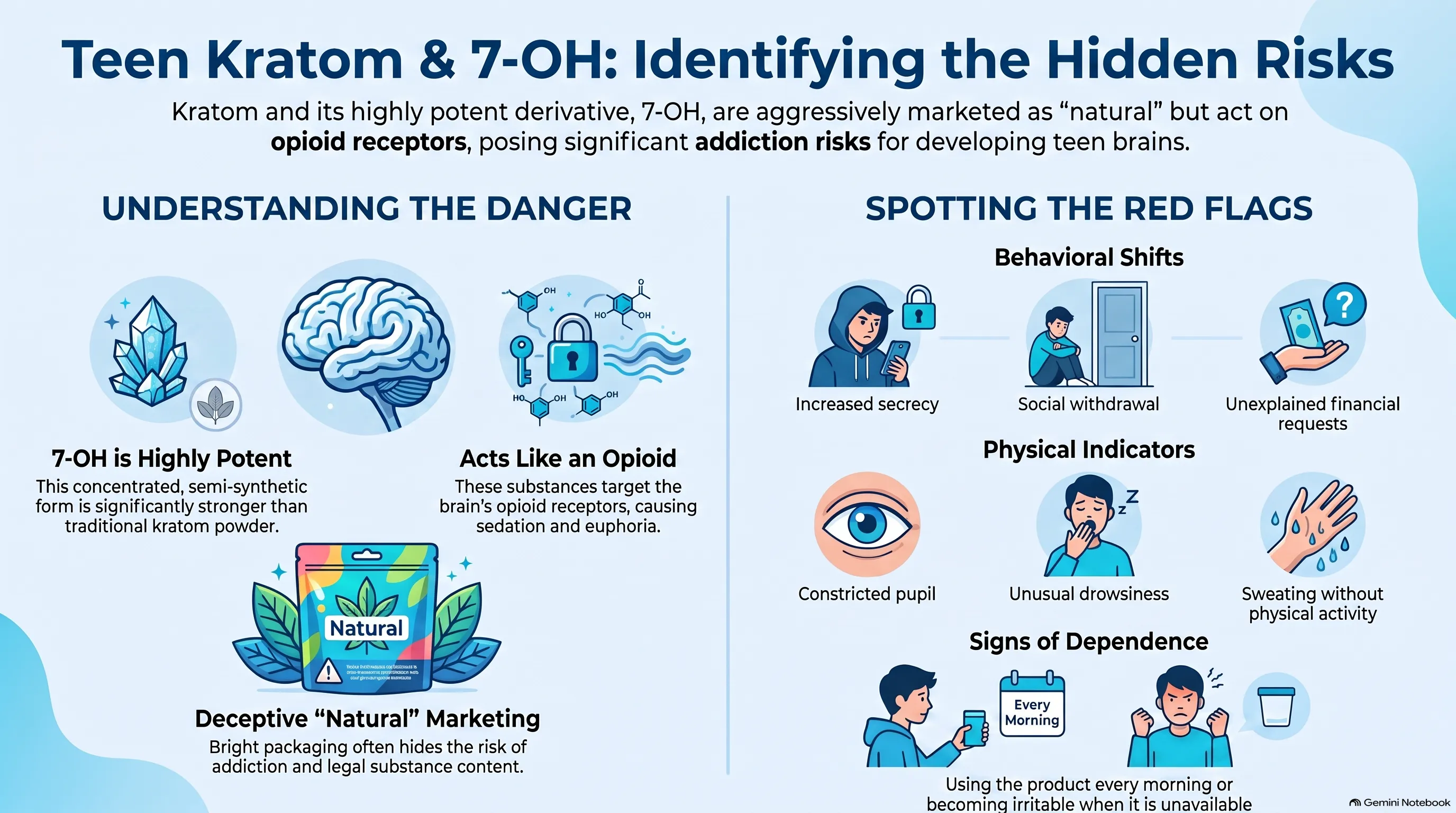
Kratom is a plant from Southeast Asia whose leaves contain active compounds called alkaloids, primarily mitragynine and 7-hydroxymitragynine, that act on opioid receptors in the brain [1]. At low doses it produces stimulant-like effects. At higher doses it produces sedation, pain relief, and euphoria similar to opioids.
7-OH is a concentrated, semi-synthetic form of 7-hydroxymitragynine that is significantly more potent than standard kratom powder or capsules. It is sold in liquid shots, gummies, tablets, and sublingual films, often in brightly colored packaging with names like Hydroxie or MIT45 that do not immediately show what they contain [2].
According to U.S. poison control center data, 10.2% of kratom exposure reports between 2011 and 2017 involved children younger than 20 [3]. Among teenagers, intentional use has grown as these products have become more available and aggressively marketed.
Is Kratom Addictive for Teenagers?
Yes, and 7-OH carries a higher addiction risk than traditional kratom powder. Research has established that 7-OH causes opioid-like tolerance and withdrawal when use is discontinued without clinical support [3].
For teens, the risk is higher because their brains are still developing and are more sensitive to the effects of drugs that act on opioid receptors. The same neuroplasticity that makes the teenage years a period of growth and learning also makes it a period of heightened vulnerability to addiction.
The marketing of these products as natural, herbal, or a safe alternative to prescription medications makes them extra risky for teens who may genuinely believe they are not taking something that carries a risk of addiction or harm [4].
What Are the Signs of Kratom or 7-OH Dependence in Teenagers?
None of the signs below on their own confirm kratom or 7-OH use. Many of them, particularly the behavioral ones, overlap significantly with the normal turbulence of adolescence, depression and anxiety, and with other substance use disorders.
A teenager who is withdrawing from family and struggling academically may be dealing with something entirely unrelated to kratom. The value of this list is not as a diagnostic checklist but as a prompt for a conversation.
If several of these signs are present at once, or if they have appeared or intensified recently without a clear explanation, that is reason enough to talk to your teen directly and to consider a clinical evaluation.
Behavioral signs of kratom abuse could include:
- Increased secrecy around phone use, purchases, and whereabouts
- Withdrawal from family, friends, and activities that previously mattered
- Declining academic performance or increased absences
- Unusual mood swings, particularly irritability when access to the product is unavailable
- Financial requests that do not have a clear explanation
- New social connections that the family does not know
Physical signs of kratom abuse may include:
- Unusual drowsiness or sedation, particularly after using
- Nausea, constipation, or gastrointestinal complaints
- Constricted pupils
- Slowed speech or movements at certain times of day
- Sweating, particularly without doing physical activity
Signs of kratom or 7-OH dependence include:
- Using the product first thing in the morning or throughout the day rather than occasionally
- Becoming anxious, irritable, or physically unwell when they have not used
- Needing more of the product to achieve the same effect
- Trying to stop and being unable to
What Does Kratom and 7-OH Withdrawal Look Like in Teens?
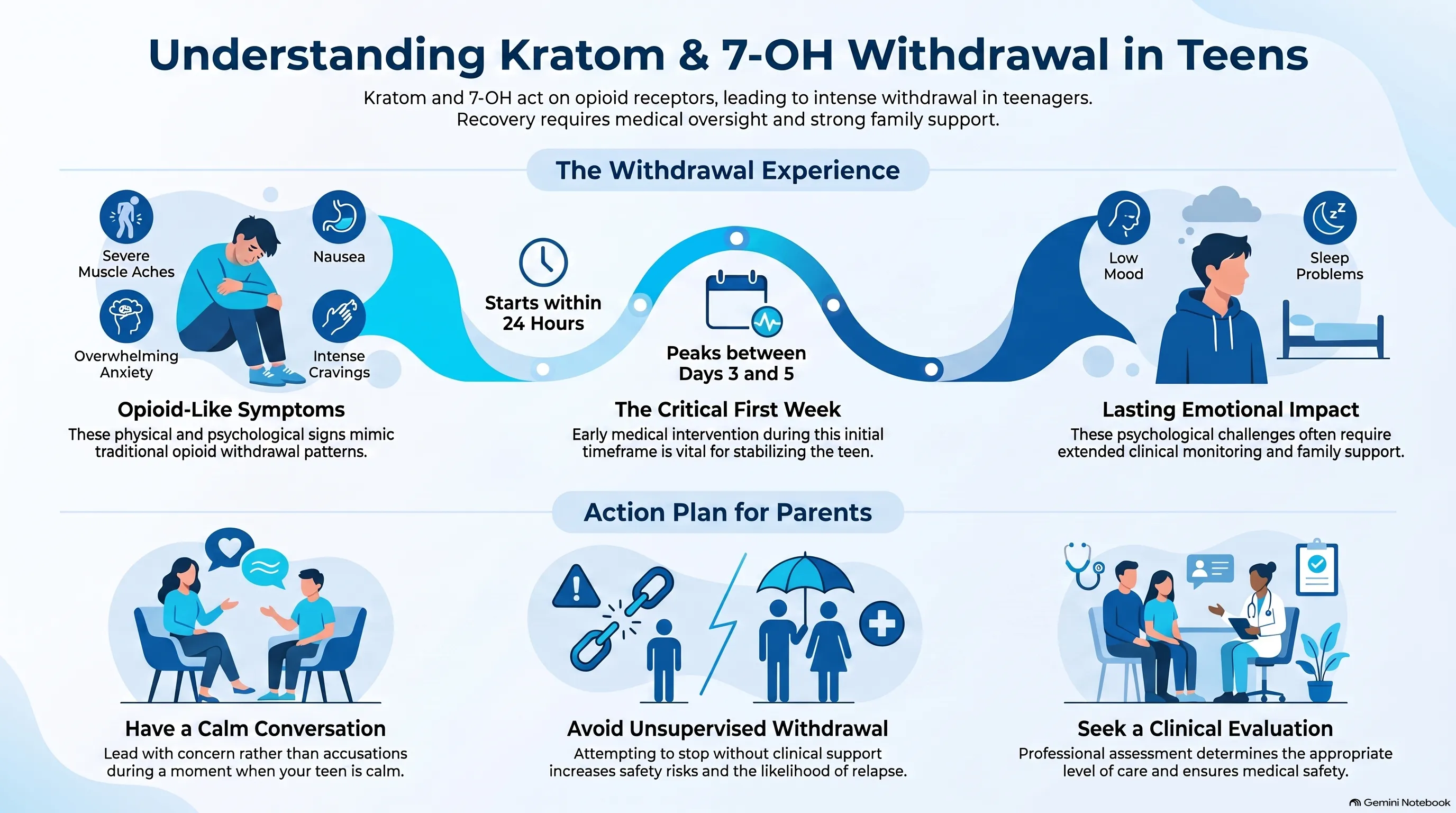
The reality is that 7-OH acts on the same opioid receptors as hard drugs, including heroin and fentanyl, and the withdrawal it produces is opioid-like in character [4]. Documented withdrawal symptoms of kratom and 7-OH include:
- Muscle aches and joint pain that can be severe
- Insomnia and sleep problems
- Nausea, vomiting, and cramping
- Anxiety and restlessness that can feel overwhelming
- Sweating and chills
- Intense cravings
- Irritability and emotional dysregulation
- Low mood and in some cases significant depression
Withdrawal from kratom and 7-OH typically begins within 12 to 24 hours of the last dose, peaks within the first three to five days, and begins to ease within the first week. Symptoms, including low mood, sleep problems, and cravings, can last for weeks, especially for teens who have been using concentrated products for extended periods of time [5].
What Should Parents Do If They Think Their Teen Is Using Kratom or 7-OH?
Do not wait for things to get worse. Early intervention produces meaningfully better outcomes than waiting until the dependence is more severe.
Have a direct conversation, but choose the moment carefully. Approach it when your teen is as calm and present as possible, not during a conflict or immediately after using. Lead with what you have noticed and what you are concerned about rather than with accusations.
Do not allow unsupervised withdrawal attempts at home. Because kratom and 7-OH withdrawal can be intense, and because the risk of relapse during the acute withdrawal window is high, attempting to stop without clinical support reduces the likelihood of success. For teens using concentrated 7-OH products, medical supervision during withdrawal is the safest approach.
Seek a clinical evaluation. An assessment by a clinician experienced in adolescent substance use will clarify the extent of the dependence, the appropriate level of care, and what the treatment process needs to look like for your teen.
How Lotus Behavioral Health Treats Kratom and 7-OH Dependence in Teens
At Lotus Behavioral Health we treat teens ages 12 to 17 navigating substance use disorders, alongside the mental health conditions that so frequently accompany addiction. Our clinical team conducts a thorough assessment at intake that includes a complete substance use history so your teen's treatment plan reflects what is actually present, not just the primary drug identified at intake.
Our programs include residential treatment with 24/7 nursing coverage, PHP, IOP, and outpatient options, with academic continuity built into every level of care so your teen does not fall behind in school during treatment. Family involvement is central to how we work, because we know that a teenager's recovery is inseparable from the safety and support of their loved ones.
If you have questions about whether your teen's kratom or 7-OH use has crossed into dependence, or if you are ready to talk about what treatment would look like, our admissions team is available now.

Sources:
[1] National Institute on Drug Abuse. (2024). Kratom. NIH National Institute on Drug Abuse.
[2] Reif, B., et al. (2025). Substance use disorder following consumption of a novel synthetic 7-hydroxymitragynine product. Journal of Addiction Medicine.
[3] Lydecker, A. G., et al. (2025). Kratom's use and impact on pediatric populations. PMC, National Library of Medicine.
[4] Henningfield, J. E., et al. (2023). Kratom withdrawal: Discussions and conclusions of a scientific expert forum. Drug and Alcohol Dependence Reports, 7, 100142.
[5] Reif, B., et al. (2025). A case of 7-OH mitragynine use requiring inpatient medically managed withdrawal. Journal of Addiction Medicine.
About the Author




.svg)



Hours
Accreditations



.png)