How Can I Tell if My Teen Is High or Having a Mental Health Crisis?
Kratom and 7-OH act like opioids and can hook teens fast. Learn the signs of dependence, what withdrawal looks like, and when to get clinical help.

Teen substance use and a mental health crisis can look alike from across the room: glassy eyes, racing speech, sudden mood shifts, and confusion. The clearest differences usually come from a few specific physical signs tied to each substance, plus context clues like paraphernalia, empty liquor bottles, or missing pills.
This guide breaks down what cannabis, alcohol, stimulant, and opioid intoxication actually look like, compares them to panic, psychosis, mania, depression, and trauma responses, and covers when the situation is a 911 emergency.
What Does It Look Like When a Teen Is High?
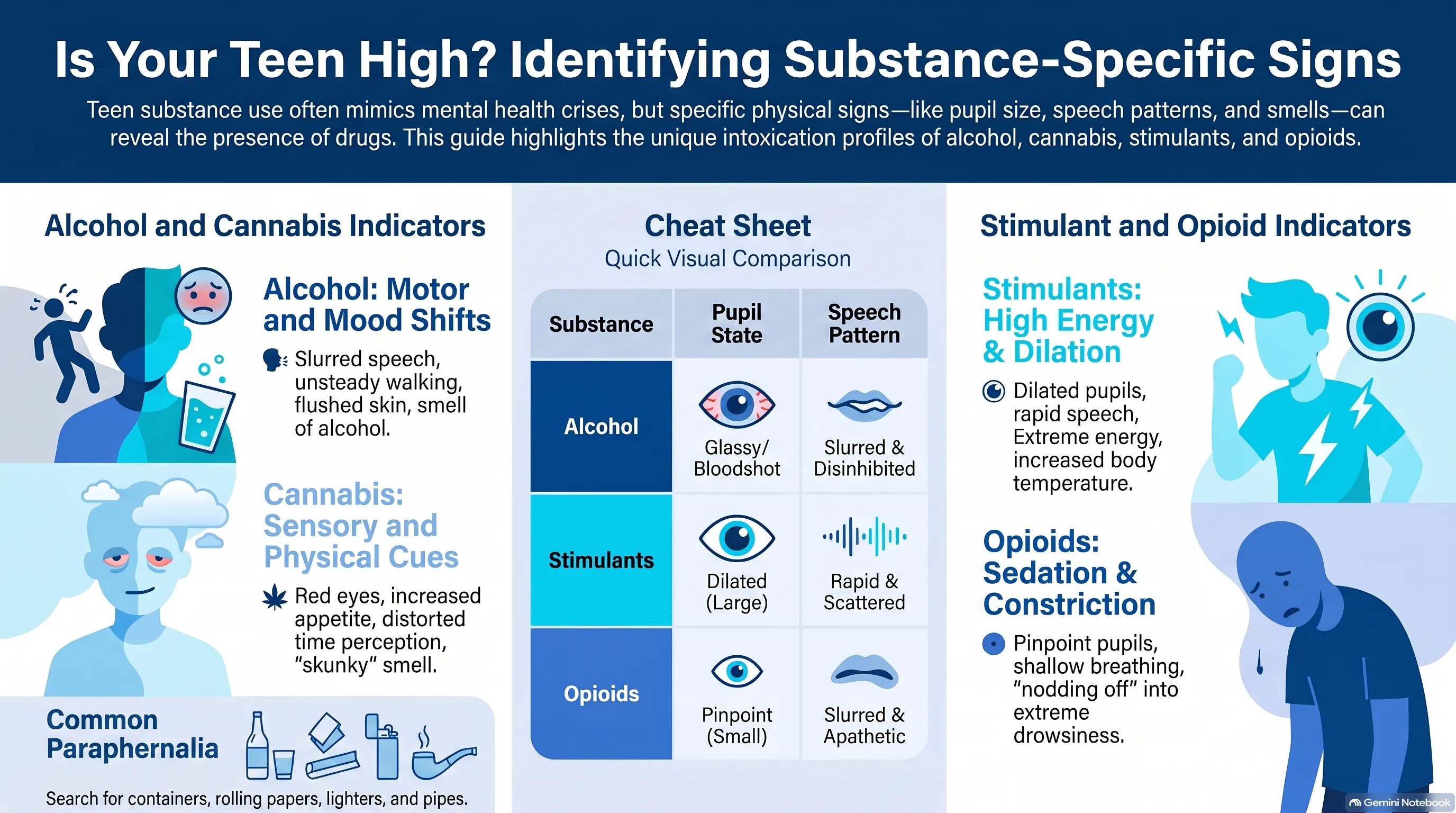
No two substances present the same way, but a few patterns show up across most drugs of misuse: a noticeable shift in coordination or speech, changes in pupil size, and a mood or energy level that does not match the situation.
The specific combination of symptoms, and how quickly they set in, points toward which substance is involved. Below is a breakdown of four categories parents and caregivers ask about most often.
Signs of Teen Alcohol Intoxication
Alcohol intoxication tends to move through stages, starting with disinhibition and mood changes before sedation sets in. Common signs include [1]:
- Slurred speech
- Unsteady walking or coordination
- Flushed, red face
- Bloodshot or glassy eyes
- The smell of alcohol on their breath
- Mood swings that range from silliness to sudden aggression
- Vomiting and impaired short-term memory are also common
- Finding empty liquor bottles or cans in their room
- Alcohol missing from the home
Signs of Teens High On Cannabis
Teens may seem giddy or unusually relaxed, report that time feels distorted, and in some cases become unexpectedly anxious or paranoid, particularly with high-potency products [2]. Other signs of cannabis intoxication include:
- Red or bloodshot eyes
- Dry mouth
- Increased appetite
- Rapid heart rate
- Increased sleepiness or slowed reaction time
- Smelling weed on their clothes, breath, or hair
- Finding paraphernalia such as rolling papers, lighters, or remnants of pipes/joints/blunts
Signs of Teen Stimulant Intoxication
Stimulants include cocaine, methamphetamine, and misused prescription ADHD medication like Adderall or Ritalin. Intoxication typically causes [3]:
- Dilated pupils
- Rapid or scattered speech that's hard to follow
- A surge of energy that seems out of the norm, irritability, or aggression
- Decreased appetite
- Elevated heart rate, body temperature, or blood pressure
- Some teens become paranoid, hypervigilant, or unusually confident
Signs of Teen Opioid or Pain Pill Intoxication
Opioids (prescription pain pills, heroin, or fentanyl-laced pills) produce a distinct symptom profile: pinpoint pupils, drowsiness that can look like "nodding off," and slowed or shallow breathing [4].
Teens may also present with:
- Slurred speech
- Appear detached or apathetic
- Complain of itching or constipation
- Shifts between an intense euphoric high and flatness or sedation
How is a Mental Health Crisis Different from Being High?
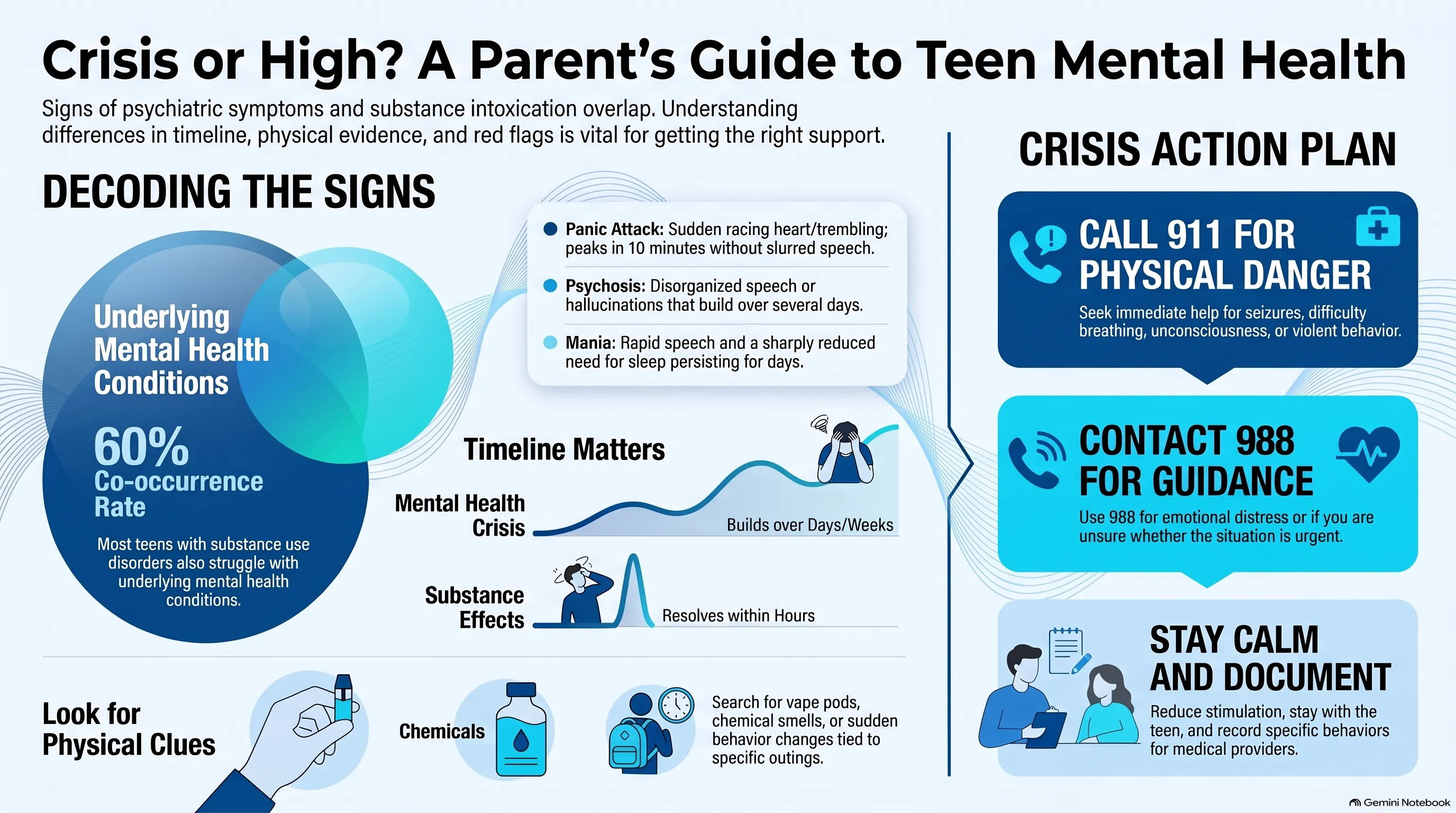
Several psychiatric presentations can look like drug or alcohol intoxication on the surface, but the timeline is different, and there's no physical evidence of substance use driving it [5][6][7].
Panic attacks
Sudden racing heart, hyperventilation, chest tightness, trembling, and an overwhelming sense of danger, usually peaking within ten minutes and without slurred speech, unusual pupils, or a substance odor.
Psychosis
Suspiciousness, disorganized speech, hallucinations, or delusions that typically build over days or weeks, often alongside social withdrawal and declining hygiene, rather than appearing and resolving within hours.
Mania
Rapid speech, a sharply reduced need for sleep, grandiosity, and impulsive or reckless decisions that persist for days, not just an evening.
Depression
Low mood, extreme fatigue, slowed movement and speech, hopeless or self-critical statements, and withdrawal from people and activities, without the euphoria or physical symptoms of a high.
Trauma Reactions
Zoning out or dissociating, flashbacks, being triggered by a specific reminder, hypervigilance, or emotional numbing that appears tied to a memory rather than to a substance.
Medication Complications
A bad reaction to a prescribed or misused medication, including serotonin syndrome, can cause agitation, sweating, tremor, fever, and confusion that mimics both intoxication and a psychiatric crisis.
Why Do the Signs Overlap So Often in Teens?
Because they frequently occur together. Rates of co-occurring mental illness among teens with a substance use disorder are estimated to be over 60%, and teens with a past-year major depressive episode are much more likely to binge drink or use illicit drugs than teens without one [8].
This means many teens using substances are also struggling with an underlying mental health condition, and many teens with an untreated mental health condition turn to substances to cope. Behavioral signs alone rarely tell the whole story.
What Other Clues Point to Substance Use?
Context matters as much as behavior. Rolling papers, vape pods, lighters, missing pills or alcohol, a chemical or alcohol smell, or a sudden change in behavior or appearance tied to a specific outing all point toward substance use rather than a purely psychiatric event.
That said, finding evidence of substance use does not rule out a co-occurring mental health crisis. Treat it as one part of the story, not the full picture.
How Do I Know If I Should Call 911?
Call 911 right away if a teen shows any of the following, regardless of whether you suspect substance use or a mental health crisis:
- Unconsciousness or inability to wake up
- Difficulty breathing, gasping, or slowed or irregular breaths
- Seizures
- Blue-tinted lips, skin, or fingertips
- Extreme confusion or not recognizing familiar people or surroundings
- Suicidal statements, a plan, or intent to self-harm
- Violent, threatening, or self-injurious behavior
- Chest pain or a very high body temperature with confusion
If the situation involves emotional distress, suicidal thoughts, or a substance use crisis without an immediate physical danger, 988 connects families with a trained crisis counselor and can help determine whether 911 or another level of care is the right next step [9].
How to Support Your Teen During A Crisis
- Stay with your teen and stay calm. Do not leave them alone.
- If any warning sign above appears, call 911 immediately.
- If it is not an emergency, reduce stimulation, remove access to substances or anything that could cause harm, and speak in a low, steady voice.
- Write down what you observed (time, specific behaviors, physical signs) so you can share it accurately with a provider.
- Contact your teen's pediatrician, a psychiatrist, or a treatment center for a professional evaluation within 24 to 48 hours, even if the episode has passed.
- Call or text 988 if you need guidance on next steps or are unsure whether the situation is urgent.
- Follow up with a full assessment. A single episode, whether it turns out to be substance use, a mental health condition, or both, is worth evaluating rather than waiting to see if it happens again.
Getting Your Teen the Right Support After a Crisis
At Lotus Behavioral Health, we work with teens ages 12 to 17 who are navigating both substance use and mental health conditions, and we work with the parents trying to make sense of what they're seeing at home.
Every treatment plan is built by a team that includes a psychiatric provider, individual therapist, and nursing staff from day one, so both sides of what your teen is going through get addressed together, not in isolation. We offer residential, PHP, IOP, and outpatient levels of care and accept most major insurance plans.
You don't need to know yet whether this was substance use, a mental health crisis, or both—that's what an evaluation is for. Reach out to our admissions team to talk through what you observed and verify your insurance at no cost. We're here to help support your family.

Sources
[1] MedlinePlus. (n.d.). Blood alcohol level. National Library of Medicine, National Institutes of Health.
[2] UF Health. (n.d.). Marijuana intoxication.
[3] LaBossier, N. J., & Hadland, S. E. (2022). Stimulant misuse among youth. Current problems in pediatric and adolescent health care, 52(9), 101265.
[4] Yule, A. M., Lyons, R. M., & Wilens, T. E. (2018). Opioid Use Disorders in Adolescents—Updates in Assessment and Management. Current Pediatrics Reports, 6(2), 99–106.
[5] Stevens, J. R., Prince, J. B., Prager, L. M., & Stern, T. A. (2014). Psychotic disorders in children and adolescents: a primer on contemporary evaluation and management. The primary care companion for CNS disorders, 16(2), PCC.13f01514.
[6] National Institute of Mental Health. (2023). Bipolar disorder in children and teens (NIH Publication No. 23-MH-8081). U.S. Department of Health and Human Services.
[7] Kerig, P. K., Bennett, D. C., Chaplo, S. D., Modrowski, C. A., & McGee, A. B. (2016). Numbing of Positive, Negative, and General Emotions: Associations With Trauma Exposure, Posttraumatic Stress, and Depressive Symptoms Among Justice-Involved Youth. Journal of traumatic stress, 29(2), 111–119.
About the Author



.svg)



Hours
Accreditations