
Why Are My Teen’s Eyes Always Red?
Red eyes in teens can mean allergies, late nights, or weed. Learn the warning signs worth watching, and how to talk to your teen without a fight.
.webp)
Red, bloodshot eyes in a teenager can come from a late study night, a sun-glare afternoon at practice, spring pollen, or marijuana, not just one thing. Knowing the full range of causes helps parents spot genuine warning signs without turning an ordinary morning into an accusation or fight.
What Causes Red Eyes in Teens That Has Nothing to Do With Drugs?
Red eyes occur when the blood vessels on the surface of the eye swell, and there are many common causes. Dry eyes, excessive sun exposure, dust or other irritants, and allergies are common triggers [1].
Florida's pollen counts and humidity make allergic redness especially common for teens who spend time outdoors. Late nights, screen-heavy schedules, and the kind of exhaustion only a teenager knows also leave eyes looking tired and bloodshot.
None of that is a red flag. It is just a body keeping score of a busy, overscheduled week.
How Can I Tell If My Teen is Smoking Weed?
Marijuana is the substance most often blamed for red eyes, and there is real biology behind it. THC widens blood vessels in the eye, which is why cannabis use is well-documented to cause reddened, sometimes glassy-looking eyes [2].
On its own, that is not proof of anything. Look instead for red eyes paired with other signs: a sweet or herbal smell on clothes, sudden hunger, unusual giggliness or calm, or eyes that seem heavy rather than just pink. One sign in isolation is rarely the full story.

What Other Drugs Can Cause Red or Unusual-Looking Eyes?
Weed is not the only substance that shows up in the eyes. Alcohol can cause bloodshot eyes too, along with pupils that look larger or smaller than usual [3].
Stimulants such as cocaine or methamphetamine tend to widen the pupils and come with restlessness or unusual energy. Depressants and opioids do the opposite, shrinking pupils to pinpoints and slowing a person down. Hallucinogens also dilate the pupils, often accompanied by confusion or detachment [3]. Pupil size is one more data point, not a diagnosis by itself.
What Do Dilated or Pinpoint Pupils Actually Mean?
Pupil size changes constantly and normally, shrinking in bright light and widening in the dark or when someone is excited. That is why size alone should not be treated as a red flag.
What stands out is a pupil that remains wide or pinpointed regardless of the room light, especially alongside glassy eyes, slowed speech, or a sudden change in coordination [3]. Context and consistency matter more than a single glance.
When Should Red Eyes Worry a Parent?
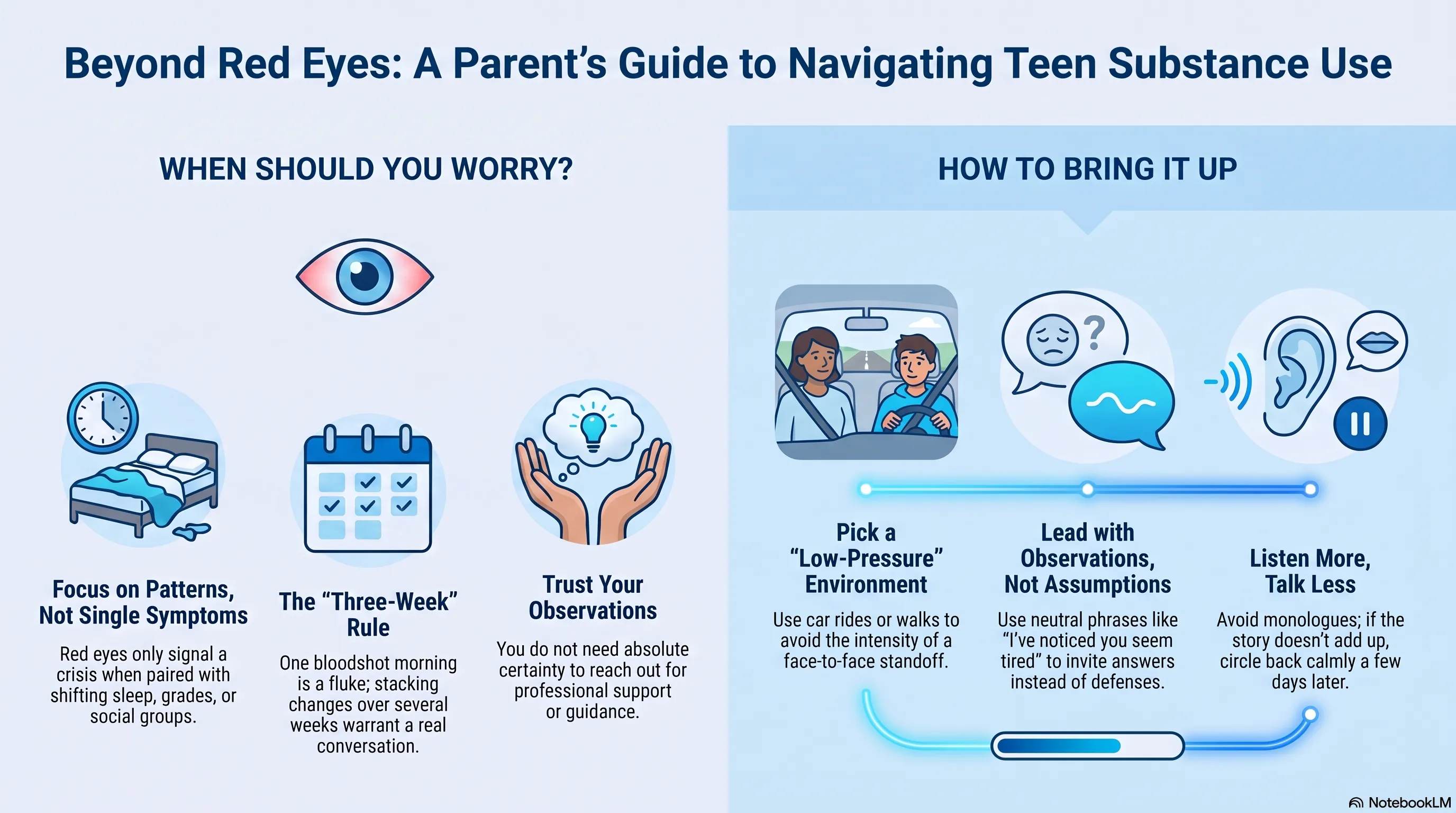
Experts who work with families on substance use agree on one thing: it is the pattern that matters, not a single symptom [4].
Red eyes are worth a closer look when they show up alongside new sleep changes, a shift in friend groups, slipping grades, or a sudden loss of interest in things your teen used to love.
One bloodshot morning after a late night is not a crisis. Several changes stacking up over a few weeks are worth a real conversation.
How Do You Bring This up Without Starting a Fight?
Nobody wants to open with "are you on drugs?" over dinner. Plus, teenagers tend to interpret that you’re giving a lecture before the second sentence even lands. A steadier approach keeps the door open for more conversations later, instead of shutting it after just one [4].
- Pick a chill moment. A car ride or a walk lands softer than a face-to-face standoff at the kitchen table.
- Lead with what you noticed, not what you assume. "You've seemed tired, and your eyes have been red a lot lately," invites an answer instead of a defense.
- Listen more than you talk. Most teenagers check out the moment a conversation turns into a monologue.
- Circle back once, calmly. If the story does not add up, check in again in a few days instead of pressing right away.
Teens deserve parents who look closely before they assume the worst. Red eyes are common, mostly harmless, and rarely the whole story on their own. If patterns do add up, the goal is to get support early while there is still plenty of room to turn things around.
Drug and Alcohol for Teens in Florida: Find The Support Your Family Deserves
If you've been watching closely and the signs keep stacking up, red eyes alongside pulling away, sliding grades, secrecy, or hanging out with a new crowd, trust what you're seeing. You don't need certainty to reach out. You just need somewhere to start.
At Lotus Behavioral Health, we work with teens ages 12 to 17 across the Orlando area and with their parents who are trying to help them. We treat substance use, but also the anxiety, depression, or trauma that often sits underneath it, because reaching a teen means seeing the whole picture, not just the symptom.
Whatever comes next, you won't be figuring it out alone. Contact our admissions team to talk through next steps with professionals who understand the reality of teen drug and alcohol use and who can quickly verify insurance benefits to ensure finances aren´t a barrier to receiving care. We are here to support your family.

Sources
[1] MedlinePlus. (2024). Eye redness. National Library of Medicine, National Institutes of Health.
[2] Bondok et al. (2024). Adverse ocular impact and emerging therapeutic potential of cannabis and cannabinoids: A narrative review. Clinical Ophthalmology, 18.
[3] Indian Health Service. (n.d.). Warning signs of substance and alcohol use disorder. U.S. Department of Health and Human Services.
[4] Substance Abuse and Mental Health Services Administration. (2024). Why it's important to talk to your child about alcohol & drugs.
About the Author




.svg)



Hours
Accreditations


.png)