Why Does My Teen Vomit Every Morning?
Morning vomiting in teens can signal anxiety, cannabis hyperemesis syndrome, or withdrawal. Learn the signs of each and talk to our admissions team today.

Morning vomiting in teens usually comes down to one of a few things: anxiety, cannabis hyperemesis syndrome (CHS), a substance withdrawal pattern, or an underlying medical condition, sometimes with chronic stress or trauma sitting underneath it all.
A physical cause is always worth ruling out first, but once that's cleared, the pattern and timing of the vomiting usually point toward one of the causes we break down below.
Medical Conditions to Rule Out First That Cause Teen Vomiting
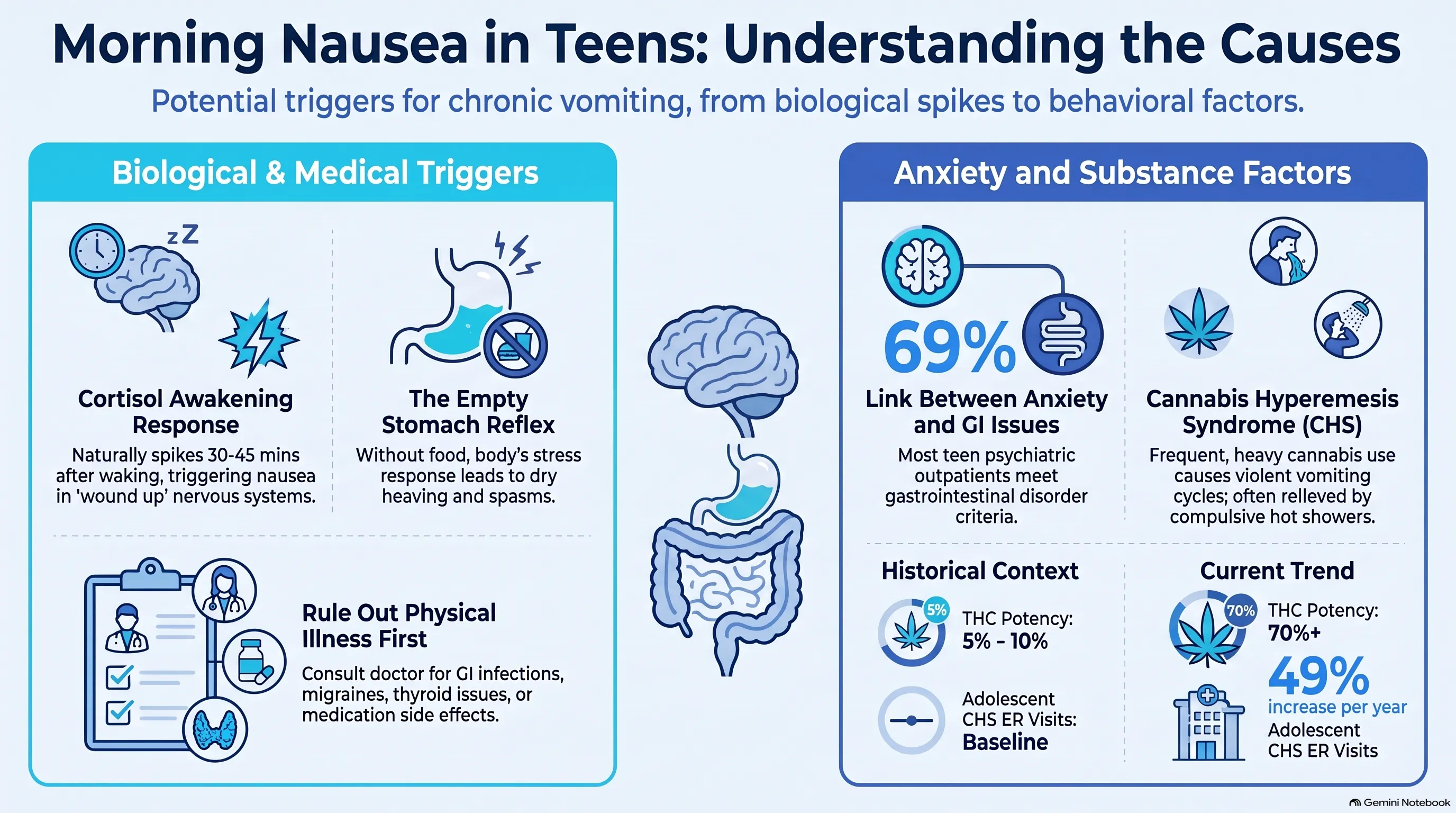
Before assuming anything behavioral, morning vomiting needs a visit with the pediatrician or family doctor to rule out physical causes, which could include [1]:
- Gastrointestinal (GI) infection
- Food poisoning
- Gastroparesis
- Migraines
- Thyroid issues
- Medication side effects
If it's ongoing, chronic, and no physical cause turns up, that's the point where an environmental or substance-related explanation becomes much more likely.
Why Is Vomiting Common in the Morning?
Mornings tend to hit hardest because of the body's stress hormone cortisol naturally spiking within the first 30 to 45 minutes after waking up [2].
In a teen whose nervous system is already wound up, that spike, combined with an empty stomach after a rough night of sleep, can often lead to feeling nauseous before they even get out of bed.
What starts out as just "feeling queasy" can turn into dry heaving, gagging, or full vomiting once an already sensitive and empty stomach gets the signal to act. An empty stomach has nothing to bring up, so the body's first response is often dry, unproductive spasms before anything is actually thrown up [3].
Anxiety and Stress-Related Nausea in Teens
Stress, social anxiety, and diagnosed anxiety disorders can all show up as severe stomach distress, and mornings are often the worst of it, especially once sleep or appetite patterns are already thrown off.
This isn't something just "in their head." The gut has its own nervous system, sometimes called the second brain, in constant two-way communication with the actual brain through the vagus nerve. When a teen is anxious, the body shifts into "fight-or-flight" mode, which pulls energy and blood flow away from digestion. That can cause real, physical nausea and vomiting [4].
A 2025 study of teen psychiatric outpatients found that almost 69% met criteria for a gastrointestinal disorder, and those teens scored higher on standardized anxiety and stress measures than teens without GI symptoms [5].
Cannabis Hyperemesis Syndrome (CHS) and Vomiting
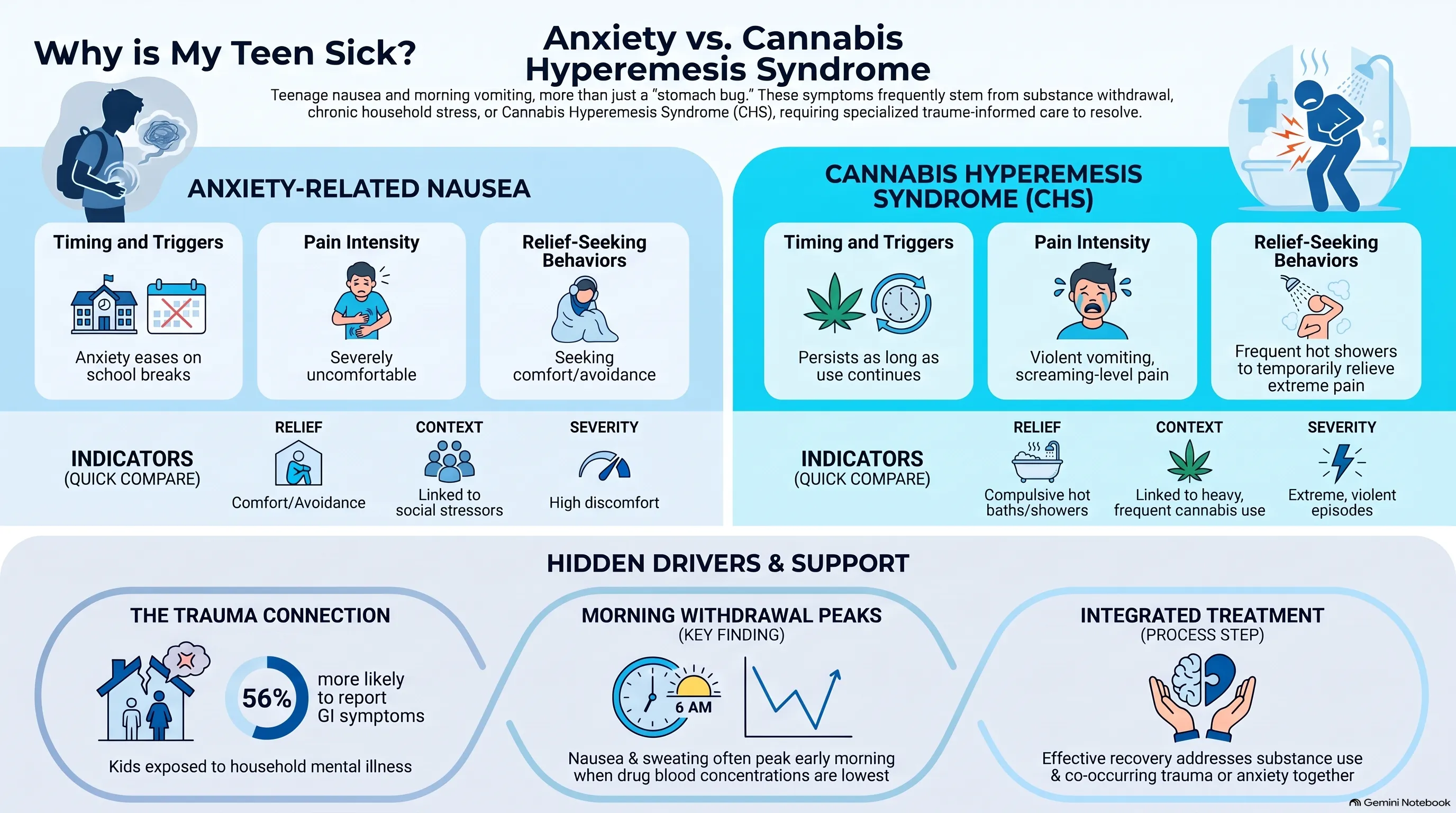
CHS shows up as recurring, often violent vomiting, the kind where teens are described as screaming or "scromiting" (screaming plus vomiting) through the pain, with abdominal cramping severe enough to send families to the ER. It is tied to frequent, heavy cannabis use, not a risk from occasional or social use [6].
Like the anxiety pattern above, it also tends to be worse around waking, when the body's natural morning hormone shifts. An empty stomach after a night without using cannabis also plays a role. If your teen is uncontrollably vomiting, unable to keep fluids down, or showing signs of dehydration, it's worth an ER visit to get them stabilized and checked out.
Many people with CHS report taking compulsive hot showers or baths, since heat temporarily relieves the symptoms. Cannabis is usually associated with easing nausea or vomiting, which is why CHS often gets missed or misdiagnosed early on [6].
Rates of Cannabis Hyperemesis Syndrome in Teens
Adolescent ER visits for CHS rose 49% per year between 2016 and 2023, according to a 2025 JAMA Network Open study. This was a sharp enough increase that researchers now describe it as tracking alongside rising rates of frequent, high-potency cannabis use among teens [7].
Experts commented that the condition has likely been underdiagnosed for years, since doctors haven't always connected the symptoms back to a teen's cannabis use. It's important for parents to understand that this isn't a rare diagnosis anymore.
THC rates are now much higher than in the past (70%+ THC vs 5-10% THC), and this increase has led to a pattern that shows up in emergency rooms frequently enough to be considered a genuine clinical concern for this age group [8].
Nausea and Vomiting During Substance Abuse Withdrawal
Withdrawal-related vomiting comes from the absence of an addictive substance overnight, like alcohol, opioids, benzodiazepines, or other drugs.
Many drugs hit their lowest blood concentration in the early morning after a full night without use, which is when withdrawal symptoms (nausea, vomiting, sweating, tremors, and anxiety) tend to peak. Parents might also notice mood swings, secrecy, missing money or medications, or a shift in friend groups.
Trauma and PTSD-Related Nausea
Trauma, PTSD, and chronic stress such as living in a home with ongoing conflict, violence, or a family member's addiction are all linked to higher rates of somatic symptoms in teens, including stomach distress and vomiting.
A 2025 study of over 73,000 US children and teens found that household mental illness was among the adversities most strongly linked to GI symptoms, with kids exposed to it roughly 56% more likely to report them than kids who weren't [9].
Chronic or complex stress changes the nervous system's baseline regulation rather than just spiking it occasionally, which is part of why a teen growing up in an unstable or unsafe home may carry ongoing stomach issues even during stretches when nothing directly stressful is happening that day [4] [9].
Finding the Right Support: Teen Cannabis Treatment in Florida
If your teen is caught in a cycle of morning vomiting, and you or medical professionals suspect cannabis hyperemesis syndrome, the vomiting itself isn't the whole story. CHS is the body's response to frequent, heavy cannabis use, and for many teens, that use is tangled up with the anxiety, stress, or another underlying mental health condition.
At Lotus Behavioral Health, we address both the cannabis use disorder in teens and whatever it's been masking or managing underneath. Our trauma-informed team treats substance use and co-occurring anxiety, depression, and trauma together through residential, PHP, IOP, and outpatient levels of care, with a psychiatric provider, individual therapist, and nursing team built into every treatment plan from day one.
You don't need a diagnosis in hand to call. Our admissions team can help you sort through what you're seeing, verify your insurance at no cost, and walk you through what treatment could look like for your teen. Reach out today to talk with someone who understands.

Sources
[1] Children's Hospital of Philadelphia. (n.d.). Vomiting.
[2] Di Lorenzo C. (2022). Functional Nausea Is Real and Makes You Sick. Frontiers in pediatrics, 10, 848659.
[3] Lang I. M. (2023). Physiology of the Digestive Tract Correlates of Vomiting. Journal of neurogastroenterology and motility, 29(1), 20–30.
[4] Johns Hopkins Medicine. 2026. The brain-gut connection.
[5] Jeong, C.-K., Kim, D.-J., Yoon, S.-H., Lee, S.-W., et al. 2026. Investigating the gut–brain axis in adolescents with mood disorders and functional gastrointestinal symptoms. Psychiatry Investigation, 23(3), 345–352.
[6] Pietrantoni, C., Margiotta, G., Marano, G., Mazza, M., et al. (2025). Cannabinoid Hyperemesis Syndrome in Adolescents: A Narrative Review. Pediatric reports, 17(4), 75.
[7] Blachford, A. 2025. More kids using cannabis, arriving in the ED. Journal of Urgent Care Medicine
[8] Peles, S., Khalife, R., & Magliocco, A. (2025). Cannabinoid Hyperemesis Syndrome: A Rising Complication. Cureus, 17(2), e78958.
[9] Martin, S. L., Klapp, J. M., Shiels, J., Ogle, C. M., & Schwimmer, J. B. (2026). Adverse childhood experiences and gastrointestinal symptoms in US youth: Psychosocial pathways and protective contexts. Journal of pediatric gastroenterology and nutrition, 82(5), 1162–1170.
About the Author




.svg)



Hours
Accreditations